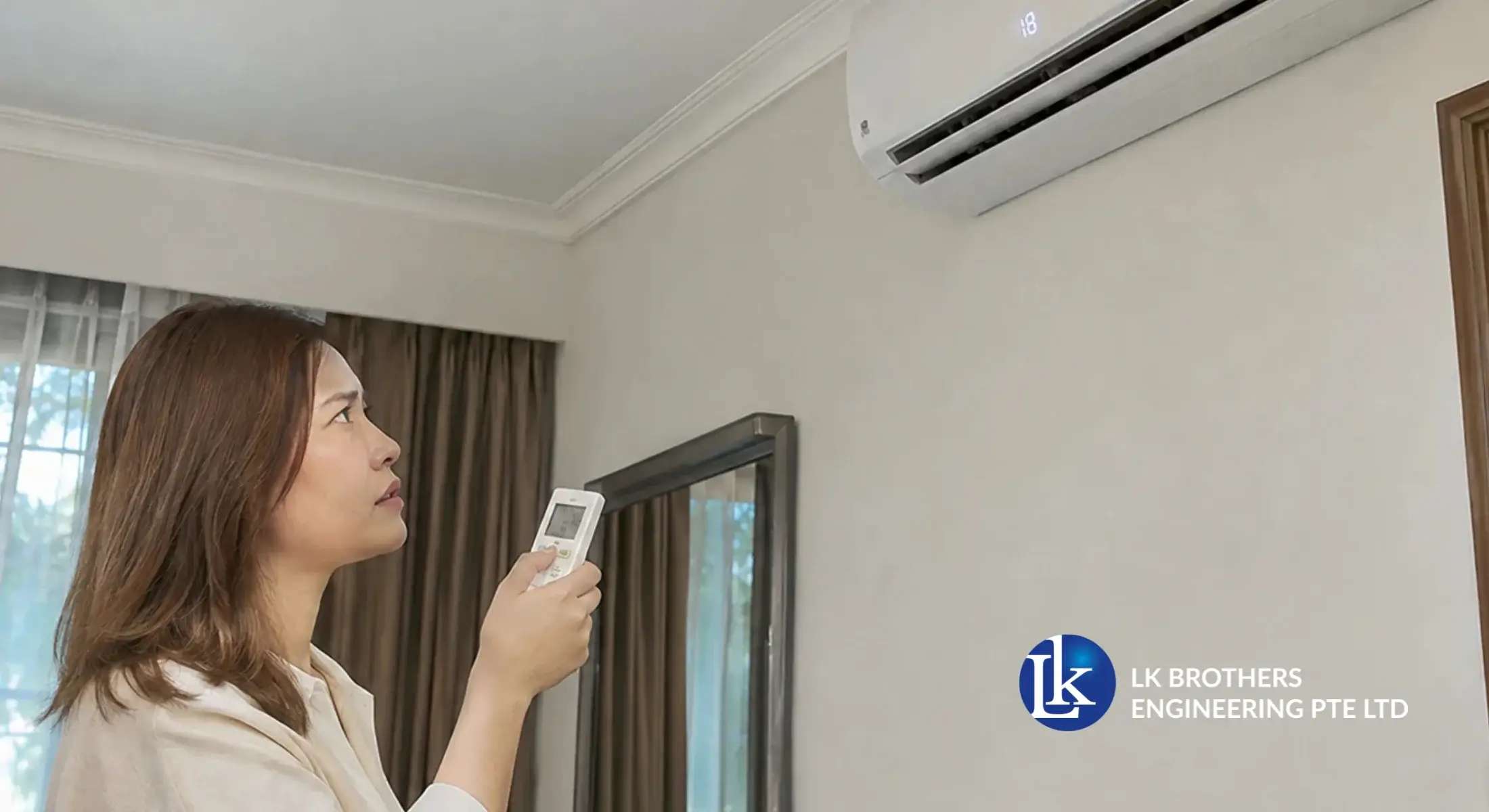
Aircon Still Not Cold After Servicing? What to Check Next
November 19, 2026
Quick Answer
If your aircon is still not cold after servicing, do not assume another round of cleaning will solve it. Check the cooling mode, set temperature, filters and unobstructed airflow. If the unit continues to blow warm air, displays an error, leaks repeatedly or develops ice, arrange proper aircon troubleshooting.
General servicing helps with dirt-related issues, but it cannot repair a defective fan, failed compressor, refrigerant leak or electrical fault.
Published November 2026 • Singapore post-servicing troubleshooting guide
It is frustrating to book a routine aircon service, switch the unit back on and find that the room still feels warm. Some homeowners immediately conclude that the technician did a poor job; others book a chemical wash or gas top-up without knowing the cause. Neither reaction is necessarily the right next step.
This article answers a narrower question than our existing seven causes of an aircon not being cold guide: what should you do when the cooling problem is still there after someone has already serviced the unit? The key is to distinguish a cleaning-related problem from an underlying fault that routine servicing was never meant to repair.
1) Check What Type of Servicing Was Actually Done
Not every aircon service is a fault-finding appointment. General servicing commonly covers routine cleaning and accessible checks. A chemical wash is a deeper cleaning service, while troubleshooting is intended to identify why something is not operating as it should.
| What You Booked | Main Purpose | What It Might Not Resolve |
|---|---|---|
| General servicing | Routine cleaning and maintenance checks | Electrical faults, refrigerant leaks, failed components |
| Chemical wash | More intensive dirt removal | Mechanical or control-system failures |
| Troubleshooting / repair | Investigate and address a specific malfunction | Depends on confirmed diagnosis and approved repairs |
If you booked basic cleaning but did not tell the company that the aircon was failing to cool, ask whether the visit included a specific cooling fault diagnosis. A new diagnostic appointment may be more useful than repeating the original service.
2) Make These Safe Checks Before Booking Another Visit
There are a few basic checks you can make without opening electrical covers or touching refrigerant pipes.
- Cooling mode: confirm the remote is on COOL, not FAN or DRY, and set a temperature below the room temperature.
- Fan setting: use a normal or moderate fan speed for a fair test; avoid assuming minimal airflow is a refrigerant problem.
- Air outlet: check that curtains, furniture and closed louvres are not blocking the supply air.
- Filters: if accessible, check they have been correctly reinstalled after cleaning and are not visibly obstructed.
- Other rooms: see whether all indoor units on the same outdoor system have the problem or just one.
- Display or indicators: record any blinking light or error code rather than repeatedly restarting the system.
Run the unit under normal conditions for a reasonable test period. Room temperature does not drop immediately, especially in a hot, sun-exposed room. However, persistently room-temperature airflow or a recurring error deserves further investigation.
3) Seven Reasons Cooling May Remain Weak After Servicing
1. The filter or airflow path is still restricted
Cleaning the removable filter alone does not guarantee the entire air path is free of obstruction. Dust deeper in the blower or coil area can continue to restrict circulation. If airflow is unusually weak, ask the technician to inspect the fan, coil and internal air passages rather than immediately prescribing refrigerant.
2. The indoor coil still has substantial build-up
Some dirt is difficult to remove through routine maintenance methods. If the evaporator coil or blower is heavily contaminated, the contractor may recommend more extensive cleaning after inspecting the affected components. Chemical wash is a condition-based decision, not an automatic next step.
3. The outdoor condenser is not rejecting heat properly
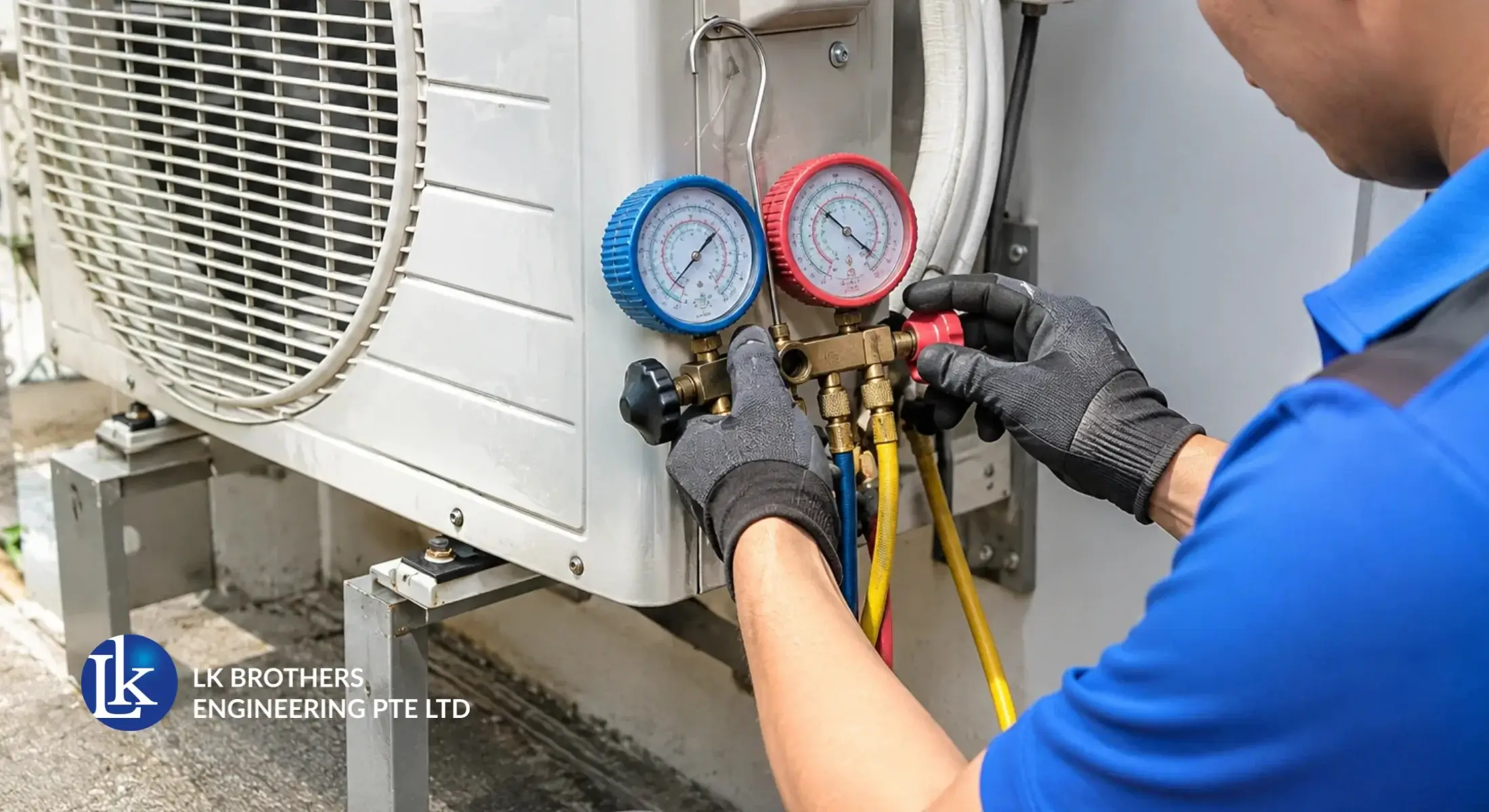
The indoor unit can blow air while the outdoor compressor or fan is not operating correctly. Problems with the condenser, airflow around it or electrical components can prevent proper cooling even if the indoor unit looks clean. Do not attempt to access an outdoor unit in a hazardous location yourself.
4. A refrigerant issue is affecting cooling
Low refrigerant charge can reduce cooling, but it is not the only explanation. A correctly sealed system should not consume refrigerant as part of normal use. If the technician suspects a leak, the cause should be investigated rather than relying on repeated gas top-ups. See our refrigerant top-up guide.
5. A fan motor, sensor or control component is faulty
Incorrect sensor readings, unreliable indoor fan speed, control-board faults or compressor starting problems can affect operation. These issues require proper testing and should not be diagnosed from a single symptom or video alone.
6. There may be icing or abnormal drainage
Ice on the coil or refrigerant line can be associated with airflow or refrigeration faults. If you see frost, water dripping near electrical components or repeated leakage, stop operating the system and arrange inspection. Do not chip at ice or open electrical compartments.
7. The room's heat load exceeds available cooling
A room exposed to strong afternoon sun, frequent door opening or unusually high occupancy can be slower to cool. A unit that was always marginal may appear worse during unusually hot periods. A technician should still check performance before assuming the system needs replacement.
4) Use the Symptoms to Decide the Next Step
| After-Servicing Symptom | What It May Suggest | Next Step |
|---|---|---|
| Strong airflow but no cooling | Cooling-cycle or outdoor-unit problem | Request troubleshooting |
| Weak airflow from one unit | Filter, blower or coil restriction; fan issue | Have airflow path inspected |
| One bedroom not cold, others normal | Indoor-unit-specific or distribution issue | Record affected unit and arrange diagnosis |
| All rooms sharing the system not cold | Possible common outdoor-system issue | Request system-wide checks |
| Ice, recurring leak, unusual smell or electrical issue | Possible fault requiring prompt attention | Stop use if unsafe; contact technician |
| Slow cooling only on very hot afternoons | Heat load, settings or reduced capacity | Record conditions and verify performance |
The table helps you describe a problem; it is not a remote diagnosis. A technician may need to measure temperatures and pressures where appropriate, inspect the electrical operation and assess the system as a whole.
5) Should You Book Another General Service, Chemical Wash or Repair?
If the system is clean but still not cooling, another standard cleaning session may offer little benefit. Choose the next service based on a stated cause.
| Confirmed Finding | Possible Service |
|---|---|
| Routine dirt and overdue maintenance | General aircon servicing |
| Significant internal dirt that standard cleaning cannot remove | Chemical wash |
| Extensive contamination requiring more dismantling | Chemical overhaul |
| Faulty components, inconsistent operation or uncertain cause | Troubleshooting and repair assessment |
| Refrigerant issue verified after investigation | Appropriate repair and refrigerant service as recommended |
For a side-by-side explanation of the cleaning options, read general servicing vs chemical wash vs overhaul.
6) What to Tell the Technician After a Recent Service
Details That Make Troubleshooting Easier
- Date of the previous service and the company or invoice, if available
- Whether the aircon was not cold before the service or only afterwards
- Whether one room or every room is affected
- Brand and any displayed error code or blinking indicator
- Remote mode, temperature setting and approximately how long the unit was tested
- Evidence of water leakage, ice, unusual sound or a burning smell
- Any previous gas top-ups, chemical washes or repair recommendations
A short video of the remote settings and indoor unit operation can be helpful, but do not film unsafe electrical or outdoor locations.
If the problem appeared immediately after a service, contact the company that did the work first and ask them to review the symptoms and applicable workmanship terms. A post-service complaint is not proof of poor workmanship, but it deserves a clear explanation.
7) When Should You Stop Running the Aircon?
Turn the system off and seek professional assistance if you notice a burning smell, smoke, sparking, exposed wiring, repeated electrical tripping or water reaching electrical equipment. Avoid removing panels, resetting a tripped breaker repeatedly or handling refrigerant.
If the issue is only weak cooling without an immediate hazard, document the symptoms and arrange an inspection instead of repeatedly forcing the unit to run for hours.
8) Frequently Asked Questions
Why is my aircon not cold even after servicing?
Routine cleaning cannot fix every fault. Restricted airflow, condenser issues, refrigerant problems, failed components and control faults can all affect cooling.
How long should I wait for it to cool after a service?
Air should begin to feel cooler as the system settles into cooling mode, but the room can take longer to reach the set temperature depending on heat and room size. If the unit continues blowing warm air, seek advice.
Does it definitely need a chemical wash?
No. Chemical wash can address substantial internal dirt, but it will not repair a broken fan, compressor or control component.
Should I top up gas immediately?
Not without diagnosis. Refrigerant should not routinely disappear from a correctly sealed system, and any suspected leak needs attention.
What should I send an aircon repair technician?
Send the servicing date, affected units, remote settings, symptom timing, any error codes and notes on unusual smells, ice, noise or water leaks.
9) Book the Right Follow-Up, Not Just Another Cleaning
When your aircon is still not cold after servicing, the best next step is to identify whether the problem is cleaning-related or a fault requiring diagnosis. LK Brothers provides aircon troubleshooting in Singapore , along with general servicing and deeper cleaning services when the condition requires them.
Aircon Still Not Cooling?
Tell our team when the last servicing was done, whether one or multiple indoor units are affected and what symptoms you are seeing. We can advise on the appropriate inspection before additional work is approved.
Book an Appointment