Can You Use Aircon During Heavy Haze in Singapore?
October 12, 2026
Quick Answer
Yes, you can use your aircon during heavy haze in Singapore. NEA says air-conditioners or fans may be used for cooling and air circulation. When outdoor air quality worsens, close windows and doors to reduce haze particles entering your home. A typical wall-mounted split aircon mainly recirculates indoor air; it does not make a room haze-free or replace a HEPA air purifier.
Updated October 2026 · Practical advice for Singapore households
When heavy haze affects Singapore, many people shut their windows and switch on the aircon. But is that safe? Should you change its settings, and will running it all day make indoor air cleaner? Here is what to do, based on Singapore's official haze guidance and the way common household air-conditioners work.
1. Should you turn off your aircon during haze?
No. There is no general NEA recommendation to turn off a properly functioning aircon simply because it is hazy. Aircon can keep a closed room cooler and more comfortable when opening windows would bring in polluted outdoor air. The important distinction is cooling versus air purification: normal split-unit filters primarily trap larger household dust, not all fine haze particles.
For a window air-conditioner that draws in unfiltered outdoor air, NEA advises closing the outdoor-air intake opening. If your system has a dedicated fresh-air intake, refer to its operating instructions or building manager; different systems work differently.
2. Should you close windows when the aircon is on?
When outdoor haze worsens, yes. Closing windows and doors reduces the rate at which haze particles enter. It does not eliminate all infiltration through gaps, nor is keeping a room sealed indefinitely always appropriate. When outdoor air quality improves, follow NEA's advice to reopen windows and doors for ventilation.
| Situation | Practical response |
|---|---|
| Outdoor air quality worsening | Close windows and doors; use aircon for cooling if needed. |
| Room feels stuffy | Avoid indoor smoke and candles. Ventilate when outdoor air improves rather than assuming aircon provides fresh air. |
| Window aircon with outdoor intake | Close the unfiltered outdoor intake during haze, per NEA guidance. |
| Outdoor air quality improves | Open windows and doors again for fresh-air exchange. |
3. Which aircon setting is best during haze?
There is no special haze-proof cooling mode. Use a comfortable temperature and normal fan operation according to your unit's manual. Dry mode removes moisture; it does not specifically filter PM2.5. Turning the temperature very low will not transform a standard dust filter into a fine-particle filter.
If you want to reduce airborne fine particles, consider a suitably sized air purifier with an effective HEPA filter, alongside sensible control of outdoor-air entry. An air purifier also requires correct placement and filter maintenance.
4. Should you run aircon 24/7 during haze?
You may run it when needed for comfort, but continuous operation is not a requirement for haze protection. Consider electricity use, manufacturer instructions, the unit's condition and whether other household members need the room cooled. Air-conditioning cannot provide the fresh-air exchange that opening windows offers when outside air becomes suitable.
5. Should you clean the aircon filter more often?
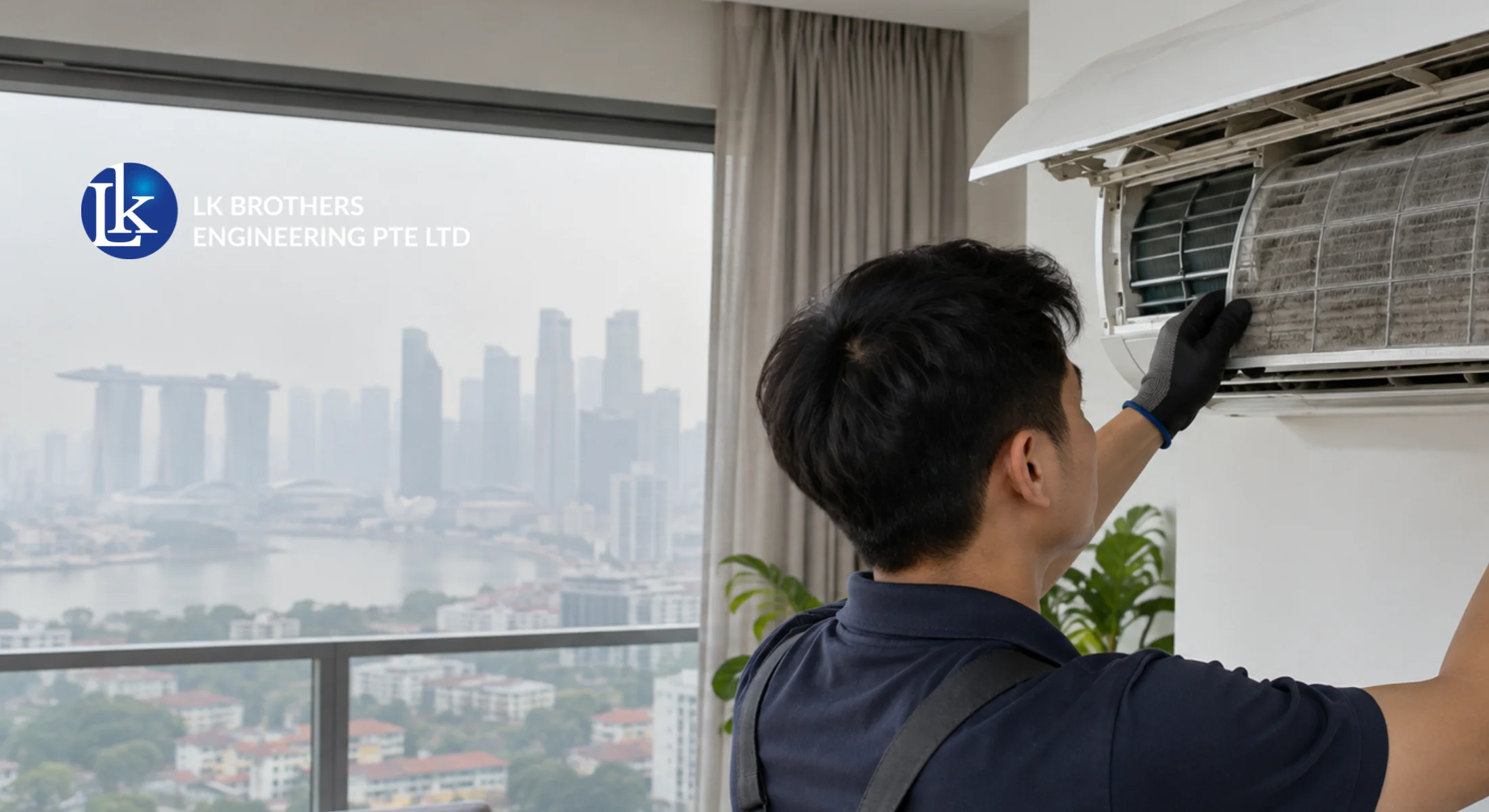
Haze may contribute to the particles circulating indoors, but filter dirt also comes from everyday dust, cooking, fabric fibres and pets. Look at the accessible filter rather than assuming an emergency chemical wash is necessary.
- Switch off the aircon before handling the filter.
- Remove only the user-serviceable filter described in the manual.
- Clean and dry it according to manufacturer instructions before reinstalling.
- Do not spray water or household chemicals into electrical components or enclosed coils.
- If cooling or airflow stays weak, arrange general aircon servicing rather than repeatedly washing the filter.
For guidance on filters, cleaning and when professional help is appropriate, read our companion guide: Does Haze Affect Your Aircon? Maintenance Tips for Singapore Homes
6. When should you book aircon servicing after haze?
Do not book a chemical wash simply because there was a hazy week. More relevant signs are noticeably restricted airflow, dust buildup, unpleasant odours or poor cooling after basic filter maintenance. Routine aircon servicing in Singapore can help address cleaning and maintenance needs. If the unit has an error code, repeated water leakage or an unresolved fault, use aircon troubleshooting instead.
Frequently Asked Questions
Is it safe to sleep with aircon on during haze?
Using a properly maintained aircon for comfort is generally compatible with NEA's household haze advice. Keep outdoor haze entry limited when outdoor air is poor, and remember aircon alone does not remove all fine particles.
Does dry mode remove haze particles?
No. Dry mode is for dehumidification, not dedicated PM2.5 filtration.
Can I open my window a little while the aircon runs?
When outdoor air quality is worsening, NEA recommends closing doors and windows to reduce haze entry. Reopen them when conditions improve.
Do I need chemical wash after haze?
Not automatically. A technician should assess the actual dirt buildup and cooling condition before recommending more intensive cleaning.
Keep your aircon comfortable during hazy periods
During haze, first control outdoor particle entry, monitor official air quality readings and use aircon for comfort. If your filters are heavily soiled or cooling has deteriorated, LK Brothers can assess whether routine servicing or fault diagnosis is appropriate.
Useful references: NEA household haze FAQs and MOH haze guidance.
Aircon Not Cooling as Well as Before?
Tell us what you have noticed and whether the filter was recently cleaned. We can help assess the suitable next step.
Request Aircon Servicing