Aircon Servicing Checklist Singapore: What Should a Technician Check?
September 9, 2026
Quick Answer
A proper general aircon servicing visit should do more than rinse the filter. The technician should clean the accessible indoor components, clear the drainage system, check the evaporator and drainage tray, assess cooling and airflow, and test the system after servicing.
If your aircon has a specific fault such as repeated leaking, an error code, abnormal noise or poor cooling that remains after cleaning, troubleshooting may be more appropriate than routine servicing.
Updated September 2026 • Singapore aircon servicing checklist • Homeowner guide
When you book aircon servicing in Singapore, it can be difficult to know whether the job was actually completed properly. The technician may only be at your home for a short time, and many of the important checks happen inside the fan coil or drainage system where you cannot easily see them.
This checklist explains what a normal servicing visit should cover, what you can check before the technician leaves, and when a problem has gone beyond routine maintenance and needs deeper cleaning or diagnosis.
1) Start With the Air Filter
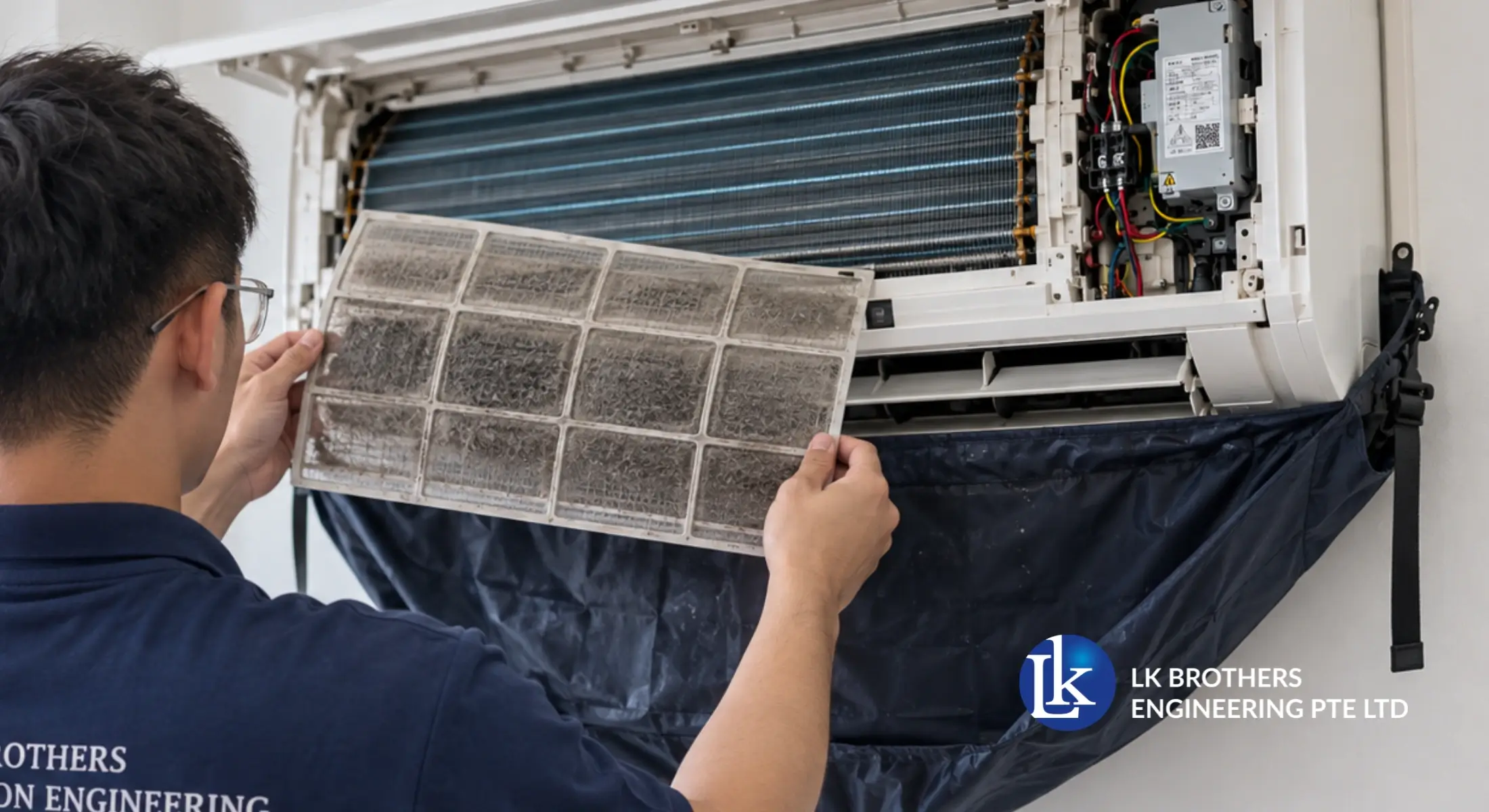
The filter is the first barrier against dust entering the indoor unit. When it becomes heavily clogged, airflow drops and the aircon has to work harder to move cool air into the room.
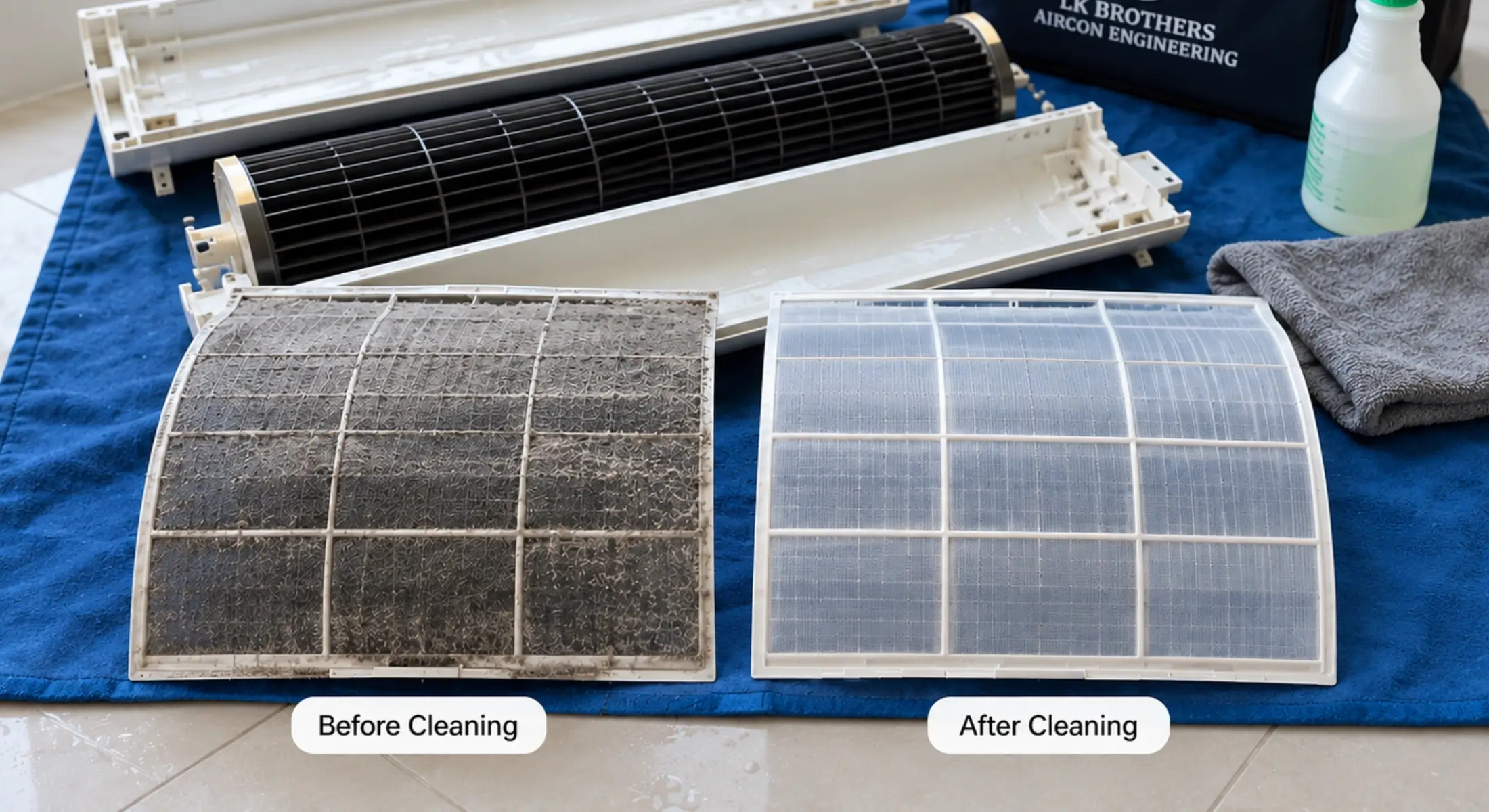
During routine servicing, the filters should be removed, cleaned and inspected before being reinstalled. If the filter is damaged or unusually dirty, that should also be pointed out to you.
- Remove and clean the air filters.
- Check for excessive dust or damage.
- Reinstall them correctly after cleaning.
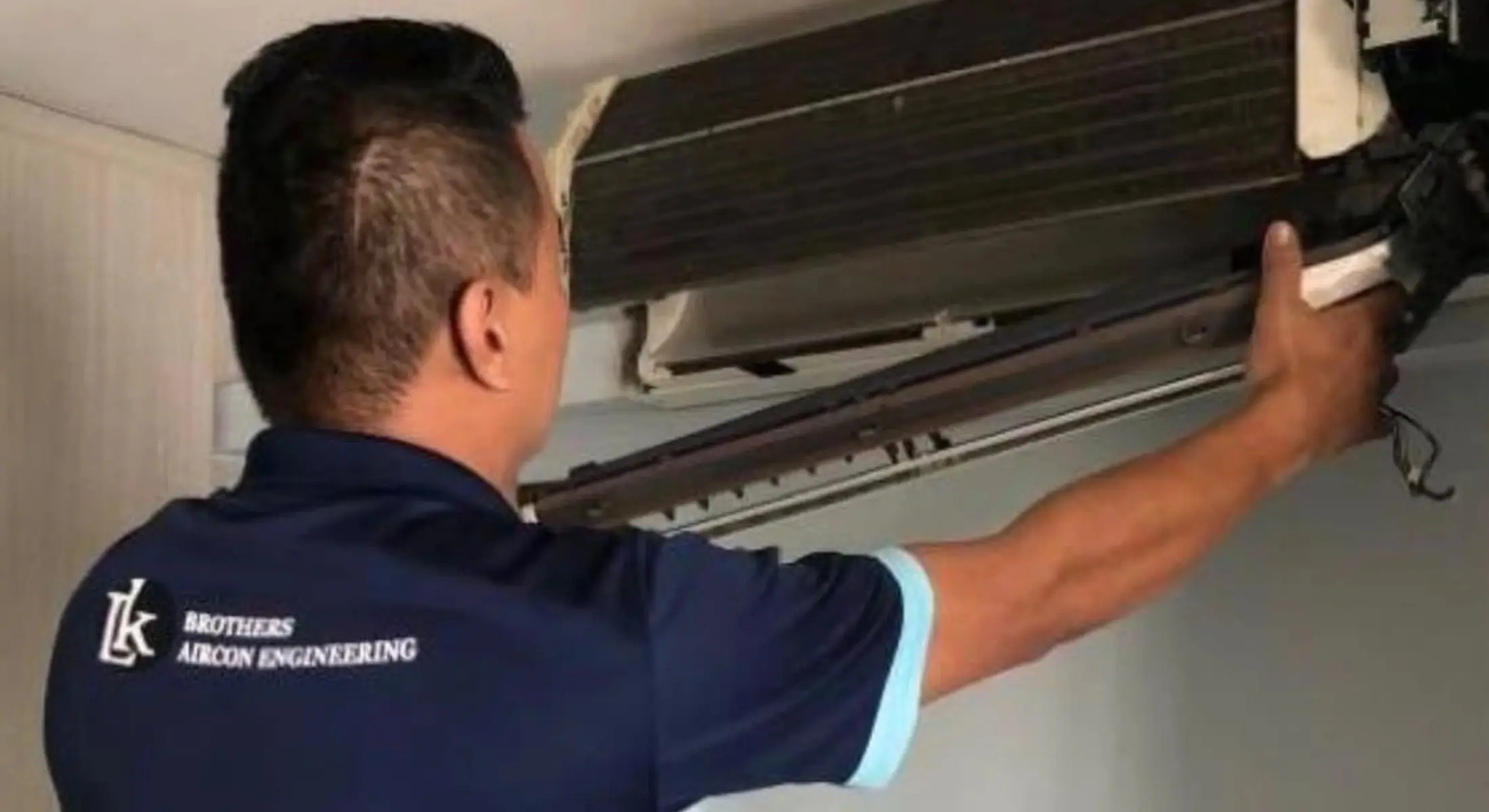
2) Clean the Accessible Indoor Fan-Coil Components
Dust does not stop at the filter. It can collect around the evaporator surface, air outlet, fan-coil casing and other accessible internal areas.
General servicing is intended to remove routine buildup before it develops into a heavier problem. If the internal components are heavily clogged with stubborn dirt, mould or residue, ordinary servicing may no longer be enough.
That is when a deeper aircon chemical wash or, for more severe cases, an aircon chemical overhaul may be considered.
3) Check the Evaporator Coil and Drainage Tray
As warm room air passes over the cold evaporator coil, condensation is produced. The water should collect in the drainage tray and leave the unit through the drain pipe.
Routine servicing should include checking and cleaning the indoor evaporator coil and drainage tray where accessible. Dirt around these areas can contribute to weak airflow, odour and drainage problems.
4) Vacuum or Clear the Drainage System
A blocked drainage pipe is one of the common reasons an indoor aircon starts dripping water. Dust, slime and debris can gradually restrict the water path until condensation backs up into the fan coil.
LK Brothers' published general servicing scope includes vacuuming the drainage system. If your unit has a history of leaking, tell the technician before work begins so the drainage condition can be checked carefully.
If water leakage keeps returning after normal servicing, do not keep treating it as a simple cleaning problem. Book aircon troubleshooting so the actual cause can be identified.
5) Check Cooling and Airflow Before and After Servicing
The aircon should not simply be cleaned and switched off. It should be operated so the technician can observe whether the airflow and cooling performance are normal.
| What You Notice | What It May Suggest |
|---|---|
| Cooling improves after cleaning | Dirt or airflow restriction may have been contributing to the problem |
| Airflow remains weak | Deeper dirt, blower issues or another fault may need checking |
| Air is flowing but not cold | Refrigerant, sensor, outdoor-unit or other technical issues may be involved |
| Unit repeatedly stops or shows an error | Troubleshooting is more appropriate than routine servicing |
Weak cooling does not automatically mean your aircon needs gas. If you are unsure, read our guide on whether your aircon really needs a gas top-up.
6) Check Compressor Pressure Where Applicable
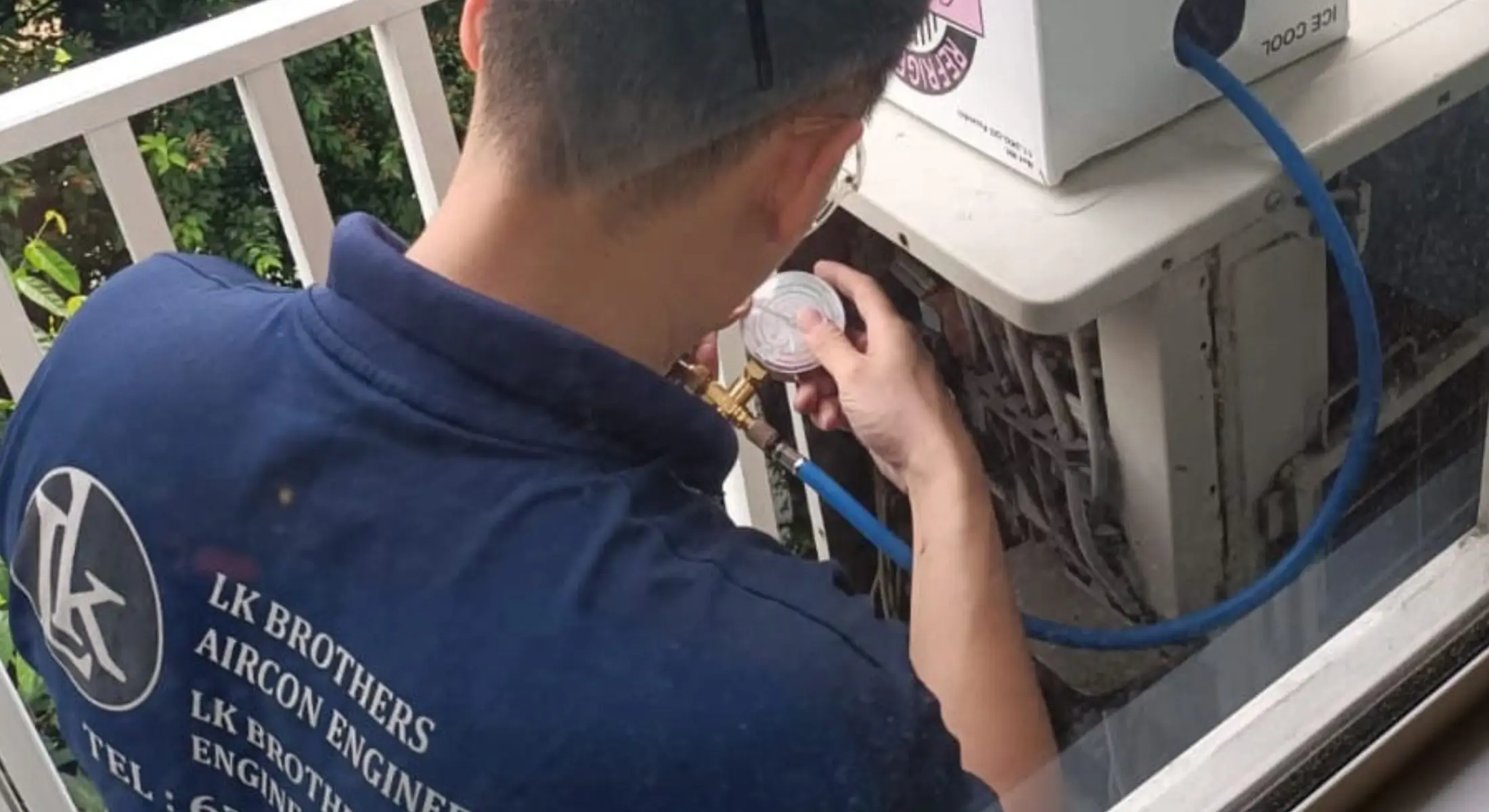
LK Brothers' published servicing scope includes checking compressor suction and discharge pressure and regulating it where required.
This does not mean refrigerant should automatically be added at every visit. A closed air-conditioning system should not require routine gas top-ups simply because servicing is being done.
If refrigerant is genuinely low, the reason should be considered — especially when the same system repeatedly needs refilling.
7) Listen for Abnormal Noise
Some operating sound is normal, but rattling, grinding, buzzing, clicking or strong vibration can indicate something beyond basic maintenance.
Ask the technician to listen to the unit after servicing. Dirt or loose covers may cause minor noise, but persistent mechanical or electrical sounds should be diagnosed rather than repeatedly cleaned.
8) Check for Water Leakage and Abnormal Condensation
Before the technician leaves, look around the indoor unit for active dripping, water marks or unusual condensation. A properly draining unit should not release water into the room.
If leakage is present only occasionally, note when it happens — for example after several hours of operation or only at very low temperature settings. These details can help with diagnosis if the problem returns.
9) Check for Musty, Sour or Burning Smells
A mild musty smell may improve after routine cleaning if it is caused by accessible dirt or moisture. Strong odour that quickly returns can indicate deeper contamination inside the blower, coil or drainage system.
A burning or electrical smell should not be treated as a cleaning issue. Switch the unit off and arrange a technical inspection.
10) Make Sure the Unit Is Tested Before Handover
The final step is simple but important: the aircon should be switched on and tested after servicing.
- Airflow feels normal.
- Cooling is functioning.
- No obvious water leakage appears.
- No new abnormal noise is present.
- The covers and filters have been reinstalled properly.
This gives you a clear baseline before the appointment is completed.
11) What General Aircon Servicing Does Not Automatically Include
A servicing appointment is routine maintenance. It should not automatically turn into every other service on the menu.
| Service | When It May Be Needed |
|---|---|
| General Servicing | Routine cleaning and maintenance when the system is generally operating normally |
| Chemical Wash | Heavier internal dirt, odour or buildup that normal servicing cannot adequately remove |
| Chemical Overhaul | More severe contamination requiring deeper dismantling and cleaning |
| Gas Top-Up | When refrigerant is confirmed to be low after checking the system |
| Troubleshooting / Repair | Specific faults such as error codes, repeated leakage, abnormal noise or poor cooling that persists after cleaning |
Our general servicing vs chemical wash vs overhaul guide explains these differences in more detail.
12) How Often Should You Use This Checklist?
For many Singapore homes, servicing every 3 to 4 months is a practical starting point, especially for units used frequently. Heavy daily usage may require more attention, while lightly used rooms may not need the same schedule.
If you are deciding between ad-hoc and scheduled maintenance, compare our one-time vs quarterly aircon servicing guide.
13) Frequently Asked Questions
What should be included in normal aircon servicing?
Normal servicing should cover routine cleaning of filters and accessible fan-coil components, evaporator and drainage-tray checks, drainage-system clearing or vacuuming, relevant operating checks and a final test of the aircon.
Does aircon servicing include gas top-up?
No. Gas top-up should not be assumed to be part of every routine servicing visit. Refrigerant should be checked and added only when the system condition indicates it is necessary.
Should the technician check the aircon after cleaning?
Yes. The unit should be operated after servicing so cooling, airflow, drainage and unusual noise can be checked before the job is completed.
When is chemical wash needed instead of normal servicing?
Chemical wash may be considered when heavier internal dirt, mould, odour or buildup remains beyond what routine servicing can remove. The correct service depends on the actual condition of the unit.
How often should aircon be serviced in Singapore?
For many homes, every 3 to 4 months is a practical starting point. The right interval depends on daily operating hours, indoor conditions and the aircon's condition.
14) Use the Checklist — Then Choose the Right Service
If your aircon is cooling normally and is simply due for maintenance, start with general aircon servicing in Singapore.
If the unit still leaks, shows error codes, makes abnormal noise or remains not cold after normal cleaning, book a diagnosis instead of repeatedly servicing the same symptom.
Need Routine Aircon Servicing?
Tell us how many fan coil units you have and whether there is any existing problem. LK Brothers can arrange routine servicing or recommend troubleshooting when the symptoms suggest a fault.
Book an Appointment